Reading a beach
The common mistake is to walk straight down to the water and cast where you parked. Most of a beach is empty. The fish are in a few places on it, those places are visible from above the sand before you have rigged a thing, and ten minutes of looking beats two hours of walking and casting at nothing.
This is how I read a stretch I have never seen. It does not need a species in mind. The beach tells you where the food is, and whatever eats the food is what you catch.
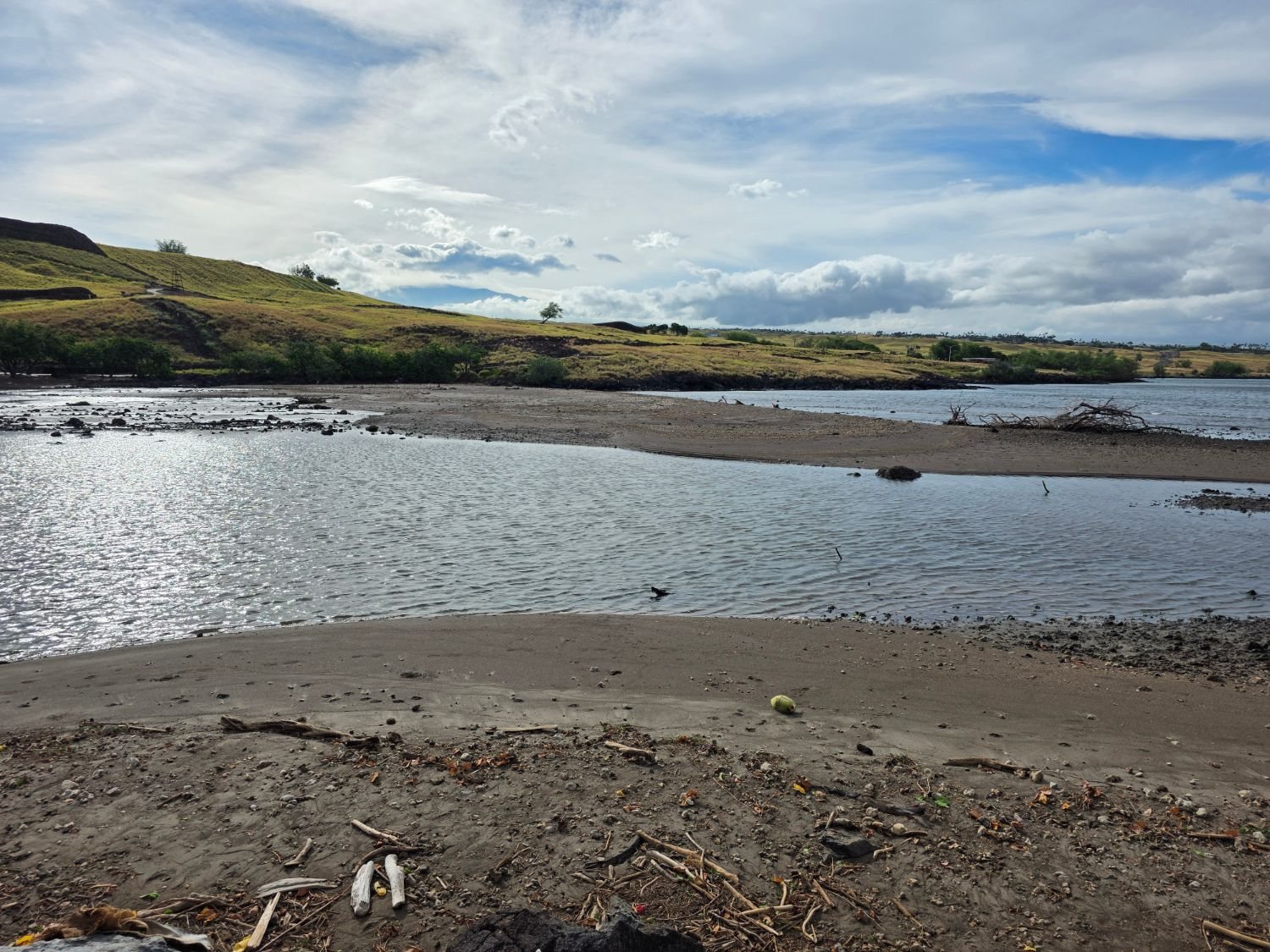
Start high, before you are on the sand
Read the beach from the access point, the dune, the parking lot, the rock at the end — anywhere with height. At sea level a beach is a line. From twenty feet up it is a map, and the binoculars are for exactly this: they save you miles, not minutes.
What you are looking for is where the water is doing something different from the water next to it. Fish live at differences.
Where the waves break, and where they do not. A line of white water well out from the beach is a sand bar. Between the bar and the sand there is a trough, and it is usually deeper than the water either side of it. A gap in the white water, where the waves roll through unbroken, is a cut — the channel where the trough drains out through the bar. The cut is the single most important feature on a sand beach, because everything that the surf stirs up gets funnelled through it, and everything that eats comes through it to feed.
Color. Dark water is deep water, or it is rock or weed. Light water is sand and shallow. A hard edge between the two is a place to stand. Green-milky water means sand lifted off the bottom; brown means a river; blue-black and clear means depth. The storm note covers what each color means after a blow.
The flat lane. A smooth, calm-looking strip running out through the surf, often with foam or sediment streaming seaward along it, is a rip. It is not the safe route through the waves. It is a river running out to sea, and it is also a conveyor belt of food. Fish sit on its edges. You fish it from the side and you do not wade it — the wading note has the rest.
Points, rock and river mouths. Anything that sticks out breaks the current and makes a seam behind it. Anything that lets water in or out — an estuary mouth, a lagoon channel, a gap in a reef — is a cut with a tide table attached. These are the features to walk to. A stretch of featureless sand between them is a stretch to walk past.
Then the water itself
Structure tells you where fish can be. Water tells you whether they are there now.
Tide stage, not tide height. The same trough fishes completely differently two hours into the flood and two hours into the ebb. Rising water pushes bait onto the flats and into the wash; falling water pulls it out through the cuts. Know which one you are standing in, and how far into it you are.
Current direction. You do not need instruments. Watch a piece of foam, or make one cast and watch which way the line bellies. Longshore current runs parallel to the beach and it decides which end of a feature the fish hold on: the down-current side, where the food arrives. If the current runs left to right, stand to the right of the structure and let it bring things to you.
Wind relative to the beach. Onshore wind stacks bait against the shore and stirs the column; offshore flattens and clears it. Hard onshore and a rising tide is often the best combination a beach has, and it is also the one where you will not be able to see any of it.
Foam lines and debris lines. Where two bodies of water meet, the stuff floating on them collects in a line. That line is a seam, food concentrates along it, and it is worth a cast on every pass.
Then the bait, and the birds
Now read what is alive, and what was.
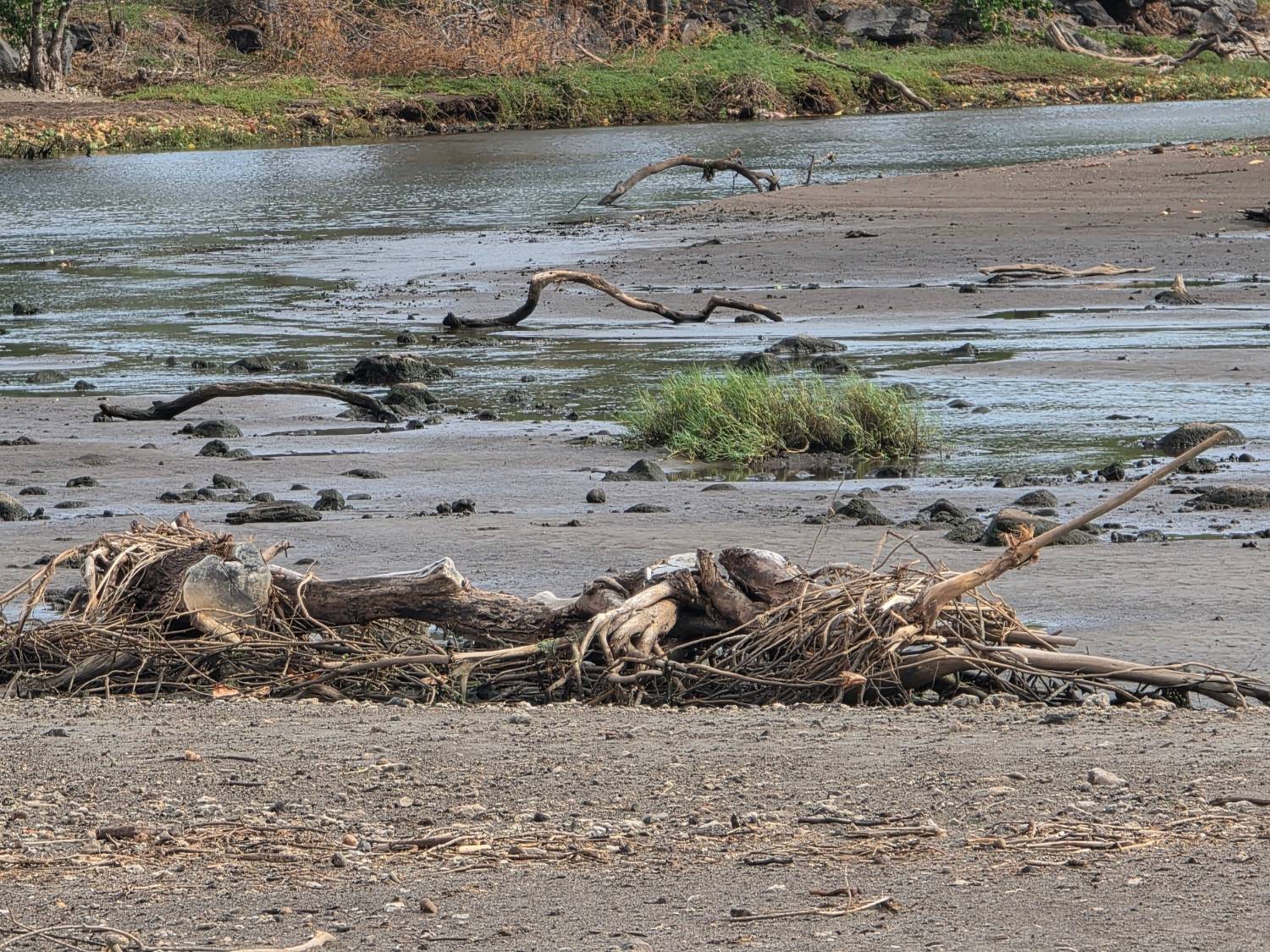
The wrack line first. Walk the high-water mark before you walk the water. Everything dead on the sand came out of the water in front of you. Dead baitfish tell you the forage and its size, which tells you what to throw. Crab molts mean soft-shell crabs are in the water and everything is keyed on them. Salps and jellies in numbers mean a water mass moved in. An empty, scoured wrack line means something else entirely. It is a census, delivered to you, and almost nobody reads it.
Bait in the wash. Flashes in the face of a wave. Showers of small fish spraying out of the water for no visible reason — there is a reason, and it is under them. Nervous water: a patch that ripples against the wind. Sand crabs show as small V-shapes in the backwash as it drains, and where there is a colony there is something that eats them.
Birds are the index, but read them properly. Terns diving means bait at the surface right now, under them, and it will move. Gulls sitting on the water in a group means bait was here or is expected. Pelicans working a line means bait at depth along that line. Birds standing on the beach facing the same way means wind, not fish. And no birds is data too: a beach with bait on it has birds on it, so a silent, birdless stretch at dawn is telling you to keep walking.
Where to actually stand
Put all of that together and the answer is nearly always the same shape: stand at an edge, on the down-current side, and fish the water where broken meets calm.
The edge of the cut, where the bar ends and the channel starts. The seam behind a point. The color change from sand to dark. The lip of the trough on a rising tide. The reef edge where energy has been taken out of the water and everything displaced by it is washing through. Fish do not sit in the middle of chaos and they do not sit in the middle of nothing. They sit where the two meet, facing into the current, waiting for the water to bring them something. Your job is to be the something.
Cast across the current and let it swing, not straight out and back. Work the near water first; the trough at your feet holds more fish than the horizon does, and a cast that lands on the bar is a cast that lands on sand.
When to walk away
Covering ground beats waiting, almost always. Here is the almost.
Give a good-looking piece of water ninety minutes across a tide change if it has the structure, the current and the bait. If it has all three and nothing moves in ninety minutes, the fish are not there, and no amount of lure changes will conjure them. If it has the structure but no bait and no birds, give it thirty. If it is featureless sand, do not stop at all.
When you move, move to the next feature, not the next spot fifty yards down. The next cut, the next point, the next color change. That might be a mile. That mile is the whole advantage of fishing on foot, and it is what the distance table is for: the walk back is the number that decides how far the next feature is allowed to be.
Walk away for the other reason too. A rip you would have to wade, a set that is arriving bigger than the pattern, a point behind you that the tide is closing. The beach that reads well and fishes badly is a beach to come back to at dawn tomorrow. The beach that reads well and is trying to hurt you is a beach to leave now.
Write it down
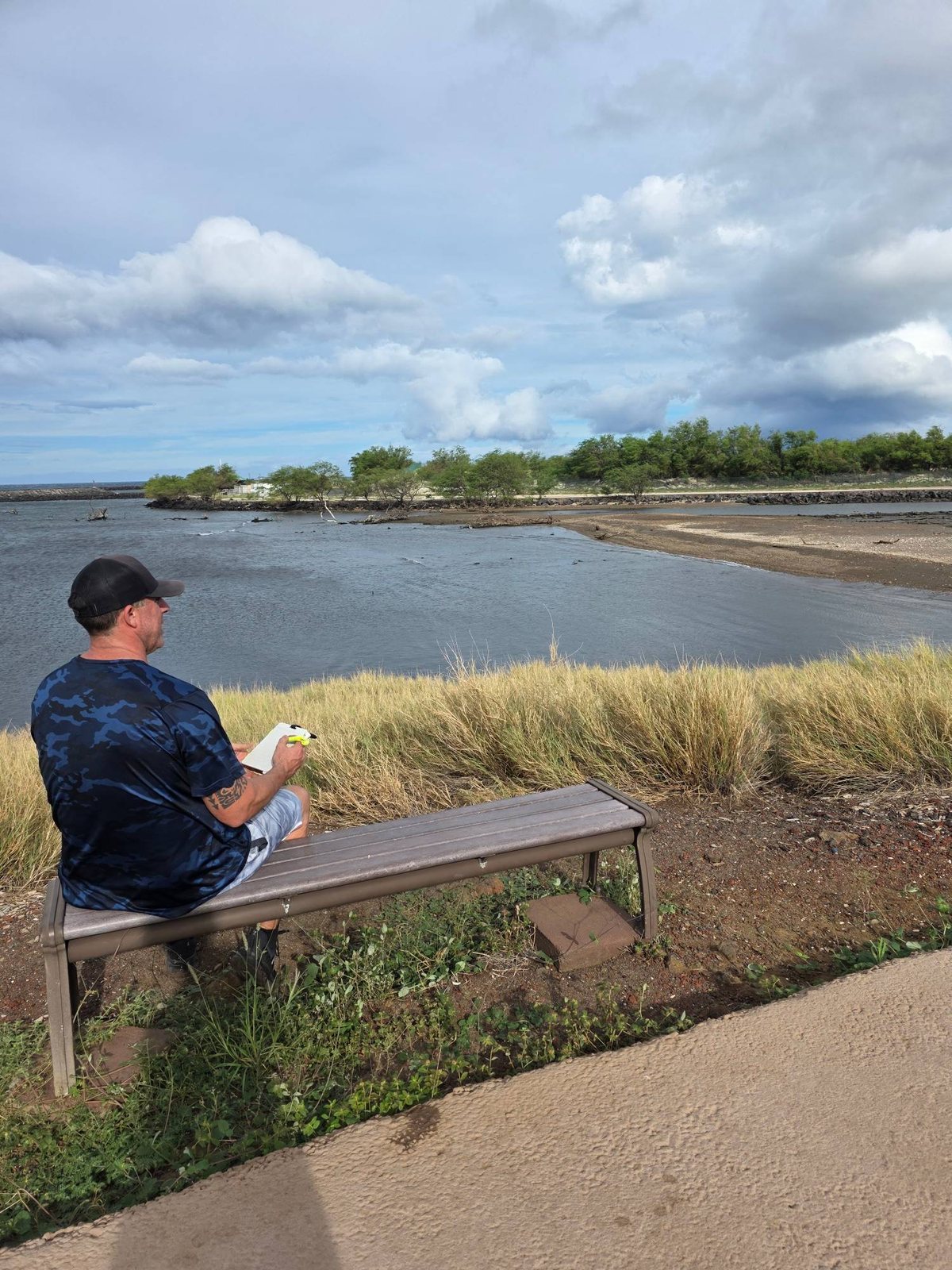
Every one of these observations goes on the slate at the time: where the cut is, which way the current ran, what the wrack held, what the birds did and when. A rough sketch of the bar and the trough beats a paragraph. In a season those sketches become a map of your beaches that no app publishes, and the next time you stand above that sand you will read it in one minute instead of ten.
The dead afternoon swim with goggles is how you check the reading. Everything above is inference from the surface. Twenty minutes with your face in the water tells you where you were right.
The gear this note is about
Straight from the register: the slots this note covers, where each stands, and under most of them the highest-rated options as rated by other people. Nothing listed as a candidate has been carried; the ones in testing have.
- Binoculars, compact 8x25 CandidateSave miles, not minutes. Are the birds two headlands down worth the walkIn testing, and the highest rated elsewhere
- Celestron Nature DX 8x32 Binoculars In Testing Bought new through Amazon and arrived used: the package seal was broken, the binoculars were out of their bags, and food is stuck to the chassis. I reported it to Celestron. They are coming to Cabo as they are. Measured: 25.44 oz (721 g), as carried in the padded case with its strap. Spec for the binoculars alone: 18 oz (510 g). A manufacturer has to stand behind the product it sells, including a unit that reaches a customer this way from a vendor.
- Nocs Provisions Standard Issue 8x25 IPX7 waterproof, 12 oz, BaK4 prisms, lifetime warranty at $100 · about $100 rated here
- Zeiss Terra ED Pocket 8x25 ED glass, 10.9 oz, waterproof nitrogen-filled; sharpest 8x25 in Trail and Kale test · about $400 rated here
- Vortex Diamondback HD 8x28
Requested 27 Sep 2026Argon-purged, O-ring sealed, 13.7 oz; VIP no-fault warranty for salt damage · about $210 rated here
- Polarized glasses, on a retainer TestingWraparound frames, retainer strap. The only gear that makes fish appearIn testing, and the highest rated elsewhere
- Pilotfish Floating Sunglasses Strap, orange In Testing The retainer this row is named for: adjustable neoprene, floats, high-visibility orange. Whether it holds the Etowah's rimless arms and keeps a dropped pair on the surface. Measured: 0.39 oz (11 g)
- Pilotfish No Tail Adjustable Eyewear Retainer, cable, 16-inch, blaze orange In Testing The low-profile option: a thin adjustable cable with no tail to catch line on the cast, against the floating strap's insurance in the water. Measured: 0.18 oz (5 g)
- KastKing Etowah Polarized Fishing Sunglasses In Testing One-piece polycarbonate shield lens, rimless. Whether it reads the wash at dawn, and whether it stays on in the wind. Measured: 0.85 oz (24 g), the frame
- Costa Del Mar Tuna Alley PRO Requested 24 Sep 2026 8-base wrap, 580G glass, side shields and drains; MidCurrent premium pick · about $279 rated here
- Smith Optics Guide's Choice Requested 27 Sep 2026 Tackle Village 9.8/10; aggressive 8-base wrap, ChromaPop glass, leash included · about $259 rated here
- Dive slate VeteranInnovative Scuba Concepts 5 x 7 with the Super Pencil, owned for years and graded 9/10. Flat plastic, on a clip or in a pocket. Turnaround, cut-offs, distance ticks, conditionsThe one owned, and the highest rated elsewhere
- Innovative Scuba Concepts Underwater Slate with Super Pencil 5 x 7 Veteran · 9/10 Requested 27 Sep 2026 The one owned: jacuzzi, pool and salt water, and it lives in the truck between trips. Flat plastic, tethered pencil, sized for a sling pocket · about $17 rated here Jacuzzi, pool and salt water, and it lives in the truck between trips
- JCS (JC Scuba) Dive Slate 3.5 x 5.5 with Pencil and Lanyard Pocket-size plastic slate, pencil and lanyard pre-attached, US-made, under $5 · about $5 rated here
- Innovative Scuba Concepts Quest Underwater Erasable Slate Requested 27 Sep 2026 Magnetic write-and-erase screen, conventional slate on the back, no pencil needed · about $45 rated here