Rigged & Ready X Max C-P: what is in the case
Everything, zipped in its case, is 46.0 oz on the kitchen scale. That is 2 lb 14 oz for a rod that reaches 8 feet 9 inches, a 5000-size reel, a second spool already loaded, and the bags it all rides in. The case is 18 inches long. It goes in the carry-on with room to spare, which is the reason it is here and not a two-piece surf rod.
Line: a wildcard. Wildcards are
open to advance to the lines if they earn a spot, and everybody loves an underdog making it.
Its rival, the Daiwa Legalis Tele, snapped a tip in Cabo and is cut at 4/10. It is competing for the
rod and reel
spot on the first line. Making any line is a win.
Backed up by: the backup reel
on the second line, once one is chosen.
Packs: into an 18-inch case, with four tips; if a tip breaks, another goes
on.
Flying: carry-on.
How it got here: bought, not provided or loaned. In contact with the
company since September 2026.
It is a carp and predator rod
The C-P stands for carp and predator. This is a rod designed in the English Lake District for British still waters: carp on the bottom, pike on dead bait, a lure rod when the tip changes. Nobody at the company is claiming it for surf. The salt is my test, not theirs, and the guarantee tag makes no mention of it.
The reasons it was worth the gamble: multi-piece to 8 feet 9 inches, medium power, casting to 3 1/2 oz, in an 18-inch case. A rod that fishes a 1/2 oz jig on one tip and a 3 oz pyramid on another is the closest thing to species-independent that packs that small. Whether the joints and the reel hold up to salt is what the next months are for.
What is in the case
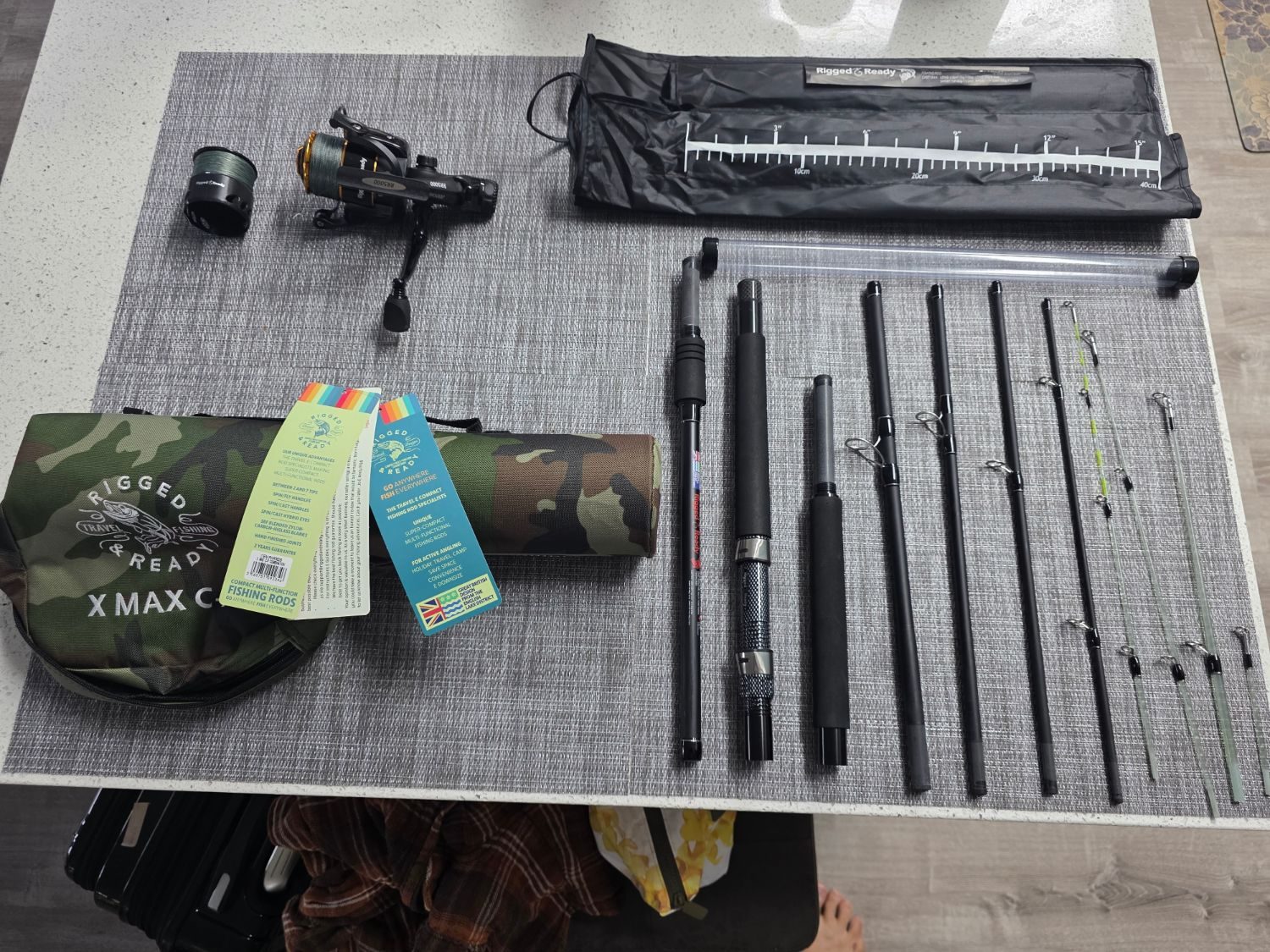
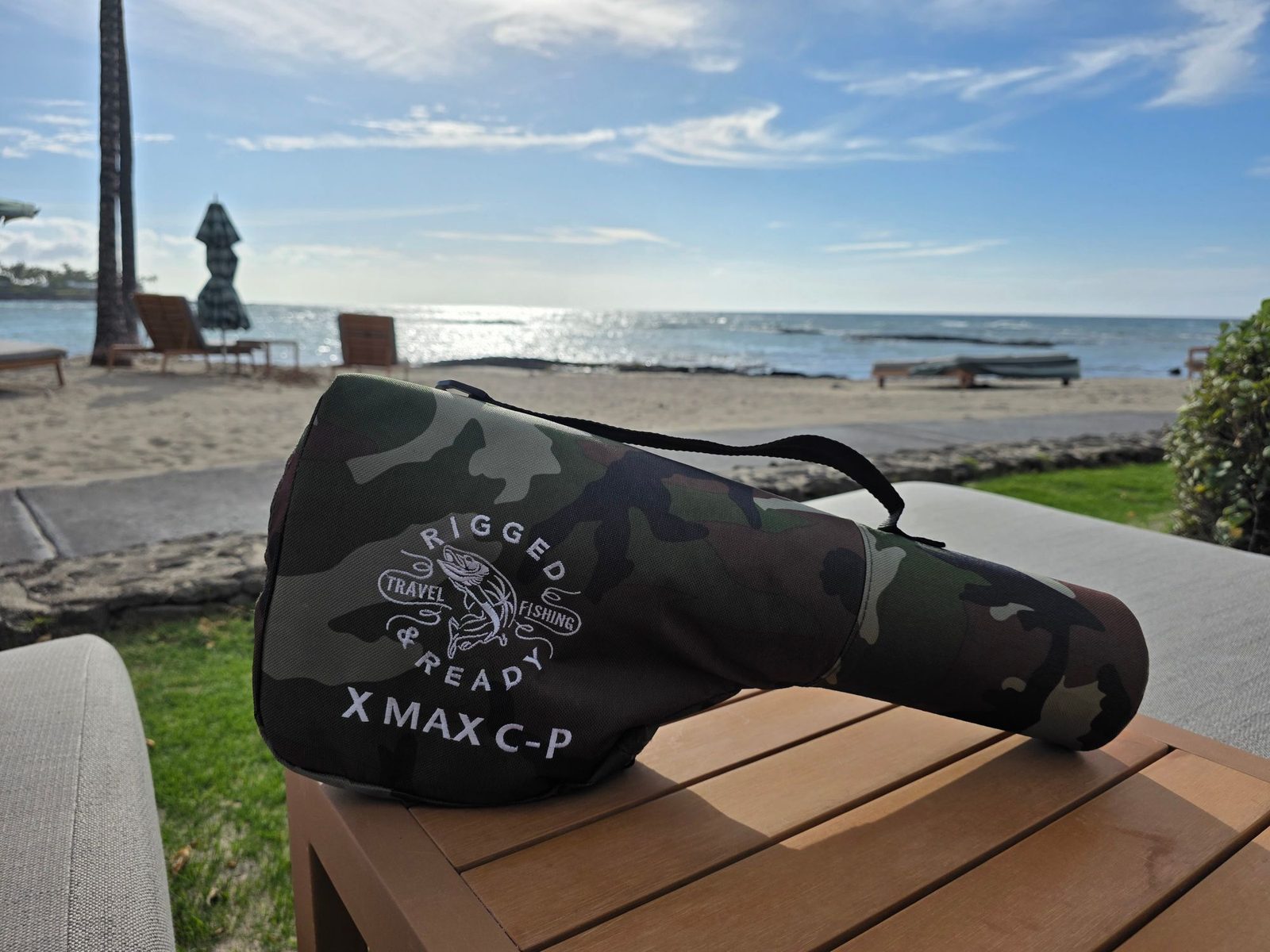
- The case. Camouflage nylon, zip along the top, a webbing carry strap, the name embroidered on the side. Shaped like a holster: wide at the reel end, narrow at the other.
- A roll bag. Black nylon, sewn pockets for each section, the rod's spec label stitched on the flap. A ruler is printed along the inside, inches above and centimeters below, to 15 inches and 40 cm. Lay a fish on it and you have a measurement for the slate without carrying a tape.
- A tip tube. Clear plastic, capped at both ends, for the thin pieces. The part most likely to save the rod from the inside of a pack.
- The rod, in eleven pieces by the maker's count: a handle with the reel seat, a foregrip section above it, a short butt that takes 0.30 m off any length, the mid sections, and four tips of different stiffness, two of them the soft glass quiver tips. Section-by-section counts and weights come in the next installment.
- The reel. RR5000, 5.1:1, 4+1 bearings, spooled with 30 lb dark green braid, in a soft bag.
- A second spool, loaded with the same braid. The register calls for a spare spool on the second line and this one arrives filled.
- Three hang tags. The guarantee: two years, and the tag says step on it, close the door on it, run it over. The maker's list of what the rod does. And a thank-you note signed by the two people who run the company.
What it weighs
Kitchen scale, one-gram resolution, read in ounces. Nothing zeroed out that should not be. The pieces not yet weighed are marked; they get done section by section, with the lengths, in the next installment.
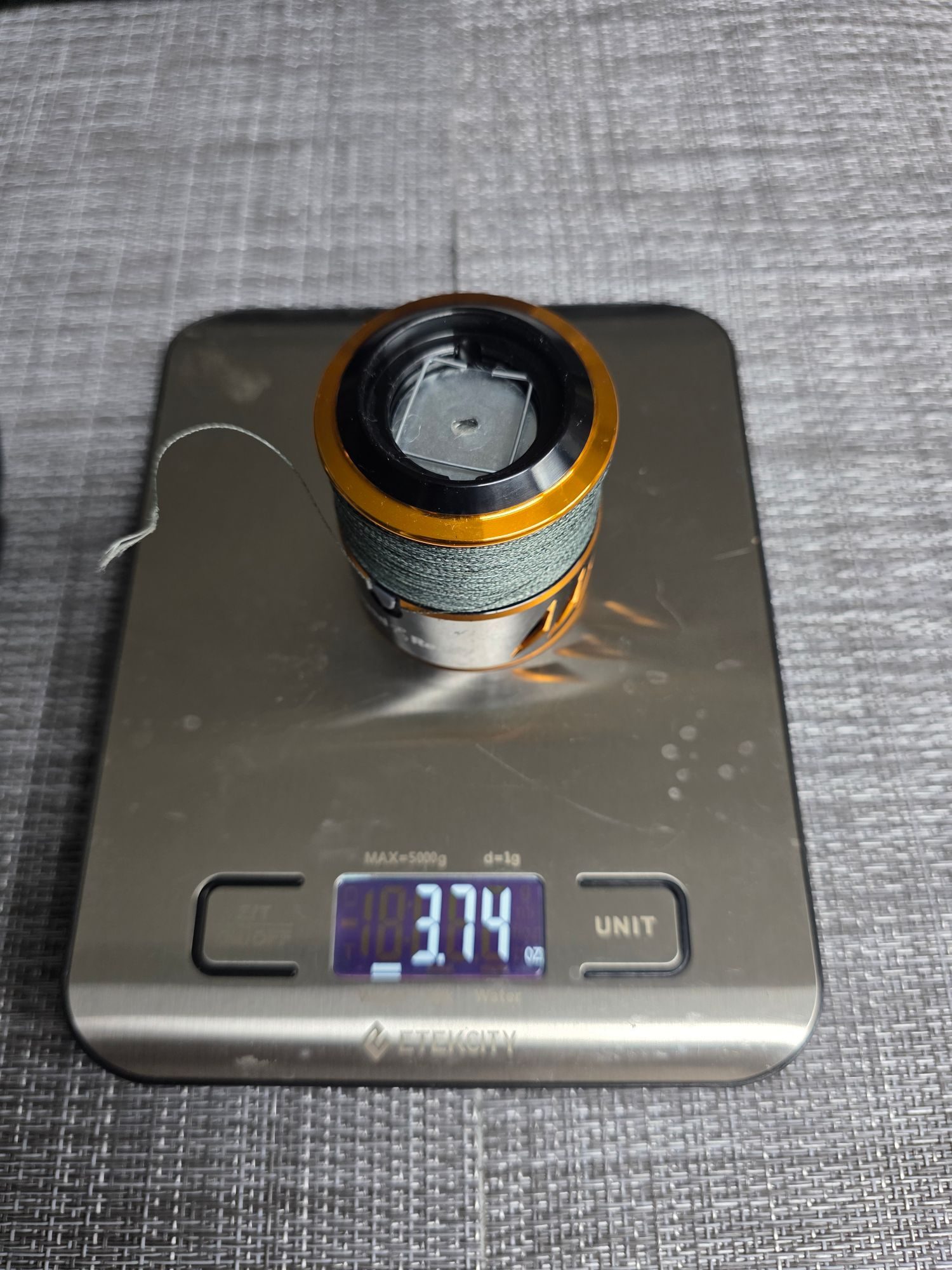
| Piece | On the scale | Maker says |
|---|---|---|
| Reel, RR5000, spooled with 30 lb braid | 15.41 oz (437 g) | 450 g (16 oz) |
| Spare spool, loaded | 3.74 oz (106 g) | not stated |
| Everything, zipped in the case | 46.00 oz (1,304 g) | not stated |
| Rod, all pieces, in the roll bag | 12.42 oz (352 g) | not stated |
| Rod, all pieces together | to weigh | 340 g (12 oz) |
| Tip, clear, tip-top and 2 guides | 0.28 oz (8 g) | not stated |
| Tip, hi-vis green and yellow bands, tip-top and 3 guides | 0.25 oz (7 g) | not stated |
| Tip, short, tip-top and 1 guide: the single eye tip | 0.11 oz (3 g) | not stated |
| Tip, clear, thicker butt, tip-top and 1 guide | 0.46 oz (13 g) | not stated |
| Short butt | to weigh | not stated |
| Roll bag, tip tube, case, empty | to weigh | not stated |
What the label says
The spec label on the roll bag is what shipped, and it is what I hold the rod to.
| Length | With the short butt |
|---|---|
| 2.70 m (8 feet 9 inches) | 2.40 m |
| 2.40 m (8 feet) | 2.10 m |
| 2.30 m (7 feet 6 inches) | 2.00 m |
| Tip | Cast maximum |
|---|---|
| Long, light | 15 g (1/2 oz) |
| Long | 20 g (3/4 oz) |
| Short | 40 g (1 1/2 oz) |
| Short, max | 100 g (3 1/2 oz) |
The maker's website gives slightly different numbers: 9 feet, 8 feet and 7 feet 3 inches, and 50 g for the short tip. Where the site and the label disagree I go with the label. The rod settles it: assembled lengths get measured with the section weights.
The reel's claims, from the website, since the reel carries none: drag to 11 kg (24 lb), capacity 170 yards of 14 lb mono. The register wants 300 yards of 30 lb braid on this slot. Thirty-pound braid runs about 0.28 mm against 0.35 mm for that mono, so the spool should hold more braid than the mono figure suggests. It came spooled with 30 lb; how many yards is what stripping one spool will tell.
First fish: Kawaihae, 4 October
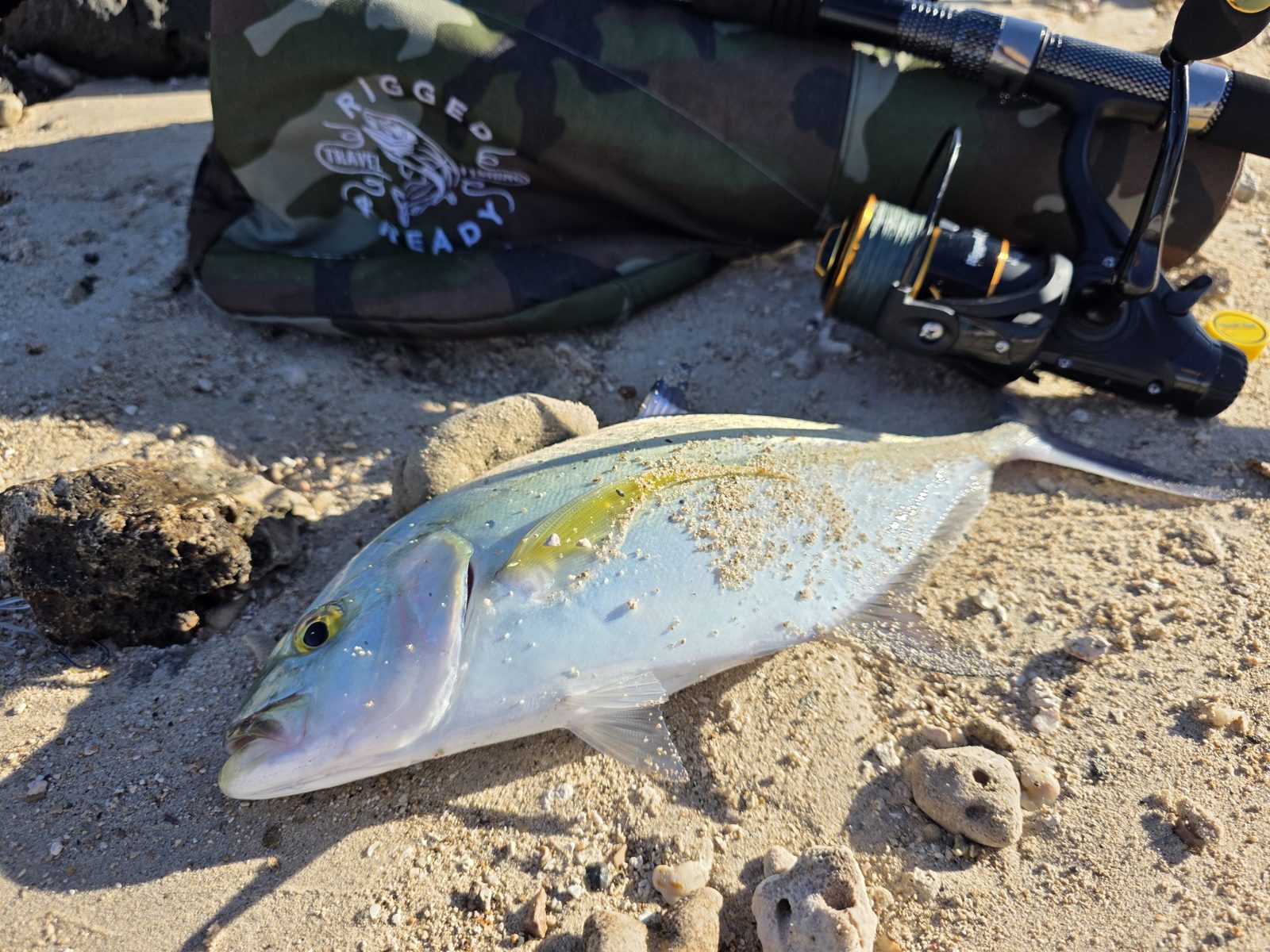
The rod is extremely impressive. I used the single-eye tip for a little more backbone to wrestle anything decent off the reef. Thankfully I did: bluefin trevally punch above their weight and are tough fighters. The reel performed, but can’t be graded until it’s put through many saltwater sessions.
The rod is an 8 out of 10. It serves multiple angling techniques here in Hawaii: pulling donkeys off the reef, menpachi at night, whipping or dunking in the surf. Each tip having a purpose is appealing without carrying multiple rods. The mobile angler must be mobile, and the X Max C-P is off to a great start. If it performs well it may move up a point. It will be hard to give it a 10 out of 10 without a glow tip for night fishing. I am in communication with the manufacturer and will make the recommendation for a glow tip; it might be as easy as modifying the current hi-vis tip with some glow dye.
We are looking forward to taking this rig to Cabo at the beginning of November to see how it handles roosterfish, jacks, barracuda, snook and more from shore.
Grade so far: the rod, 8/10, with room to move up a point; a 10 needs a glow tip for night fishing and no failures. The reel, after many more salt sessions.
What happens next
The standard says no unboxing reviews: field testing is required. The actual weight on a scale comes first. The five criteria get answered in order, as the rod and reel earn them.
- Weight earned. The table above, finished when every piece has been on the scale.
- Packability. Whether the 18-inch case rides inside the day pack or strapped to it, and whether the roll bag alone will do.
- Failure mode. What a stepped-on tip costs, and whether the guarantee is as good as the tag.
- Salt and sand. The Kohala Coast, from now until Baja. Rinse-only maintenance, the way it would get on a trip.
- Back in the bag. It flies to Cabo in November.
This note is updated as those come in. The register row carries the status.